Another beautiful summers day cruising the Dutch waterways.
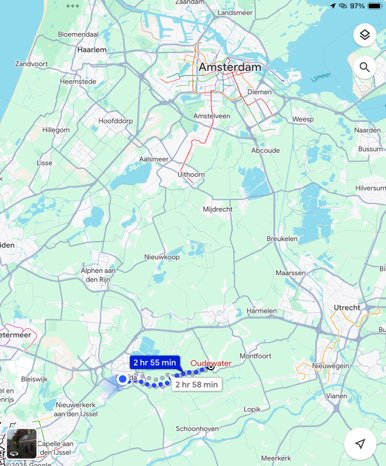
It is hard not to make comparisons between what we know so well of the English canals and what we are experiencing on the Dutch canals. Everything is much bigger to begin with. The canals are wider and deeper; the water craft that ply the waterways are very different from being very wide and tall and cruising at greater speeds. Also, the way the bridges and locks are manned is very different. It is either automated here or manned and some of the ways you pay are most unique. Our favourite is the clog system!
You simply pay the bridge keeper by putting your money in his clog which is tied on to the end of his fishing line. It cost about €3. Price varies. Also of an evening when you pull up to moor in towns and cities or marinas, there are bollards on the side of the bank where you can plug in for electricity and sometimes water, then you log onto the app and pay that way. Often there is a mooring fee associated with it which certainly varies in cost.
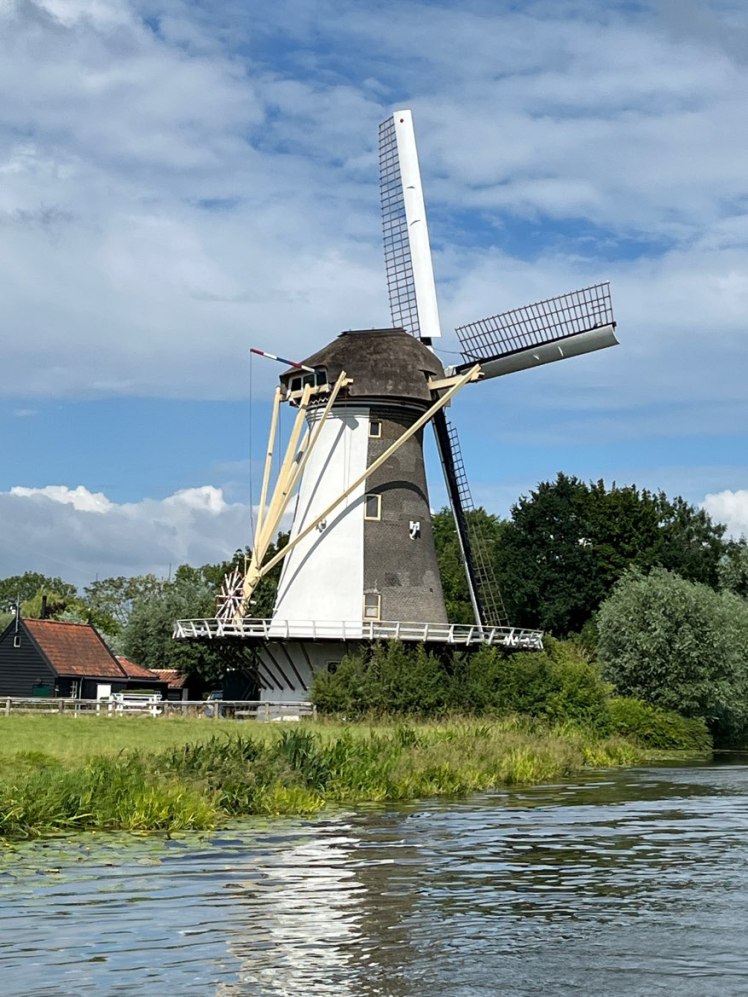
We cruised for three hours in the morning through flat countryside, which you would expect, to the town of Gouda. It really was picturesque with small farming hamlets.
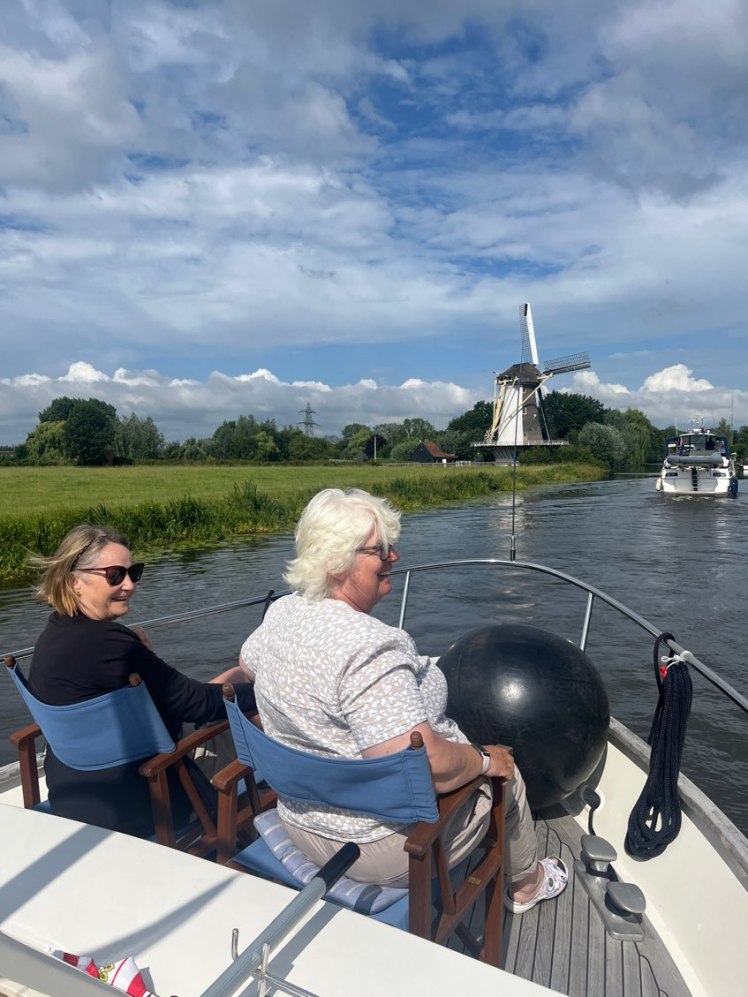
We then came through a sea lock into a tidal area but for a very short time before we went through another sea lock and back onto the canals. This put us in the town of Gouda.
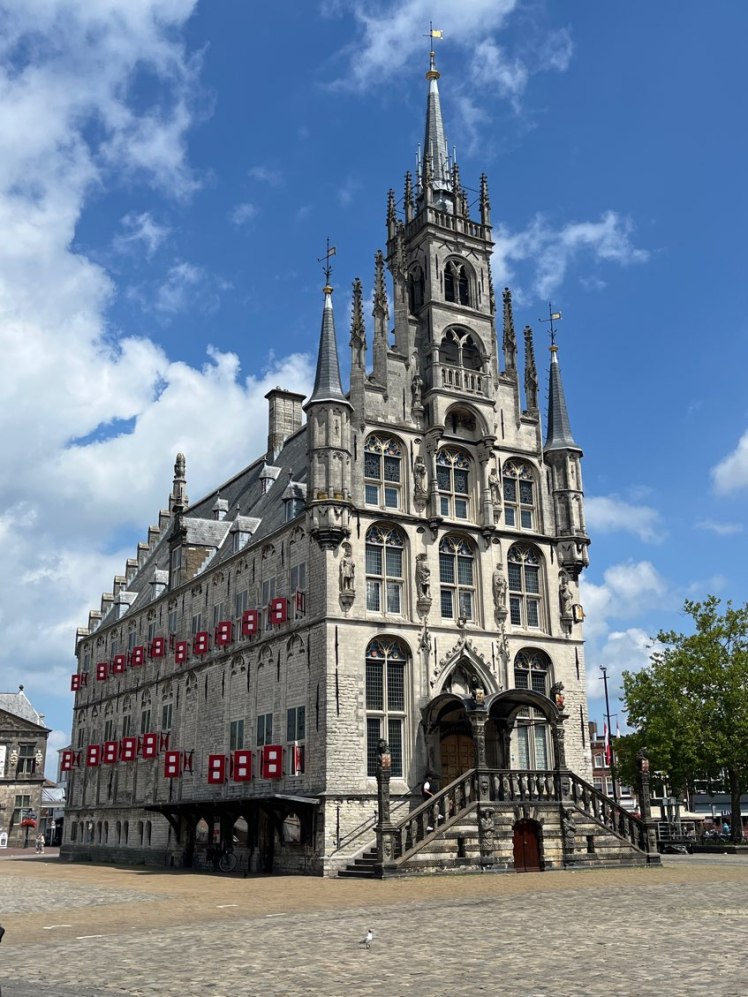
Gouda lies between Rotterdam and Utrecht in the west of the Netherlands. It is known for its array of historic churches and other buildings which makes it popular. It has a population of 75,000 people and of course is most famous for its Gouda cheese.
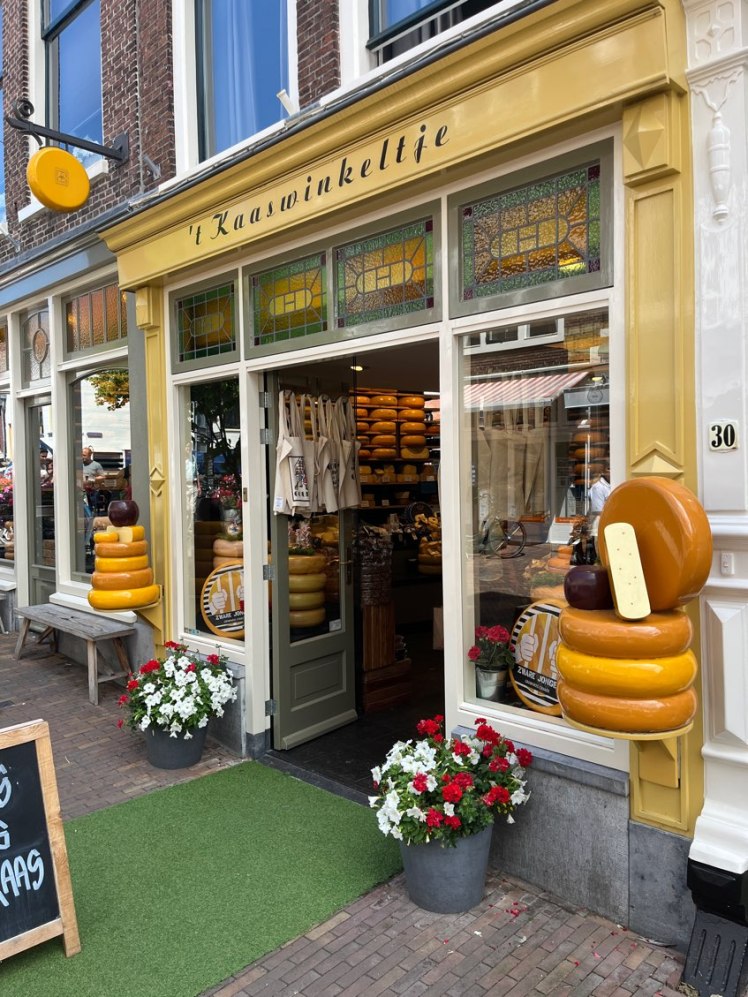
There was a cheese shop on almost every corner and a lot of opportunity to taste them – not good for the lactose intolerant but if you eat the older cheddar cheeses there is less lactaid in those varieties.

The rat that lives in our fridge back in Calgary appears to have squirrelled his way into our luggage and has had a very productive day in the central market place in Gouda – not going to name any names.
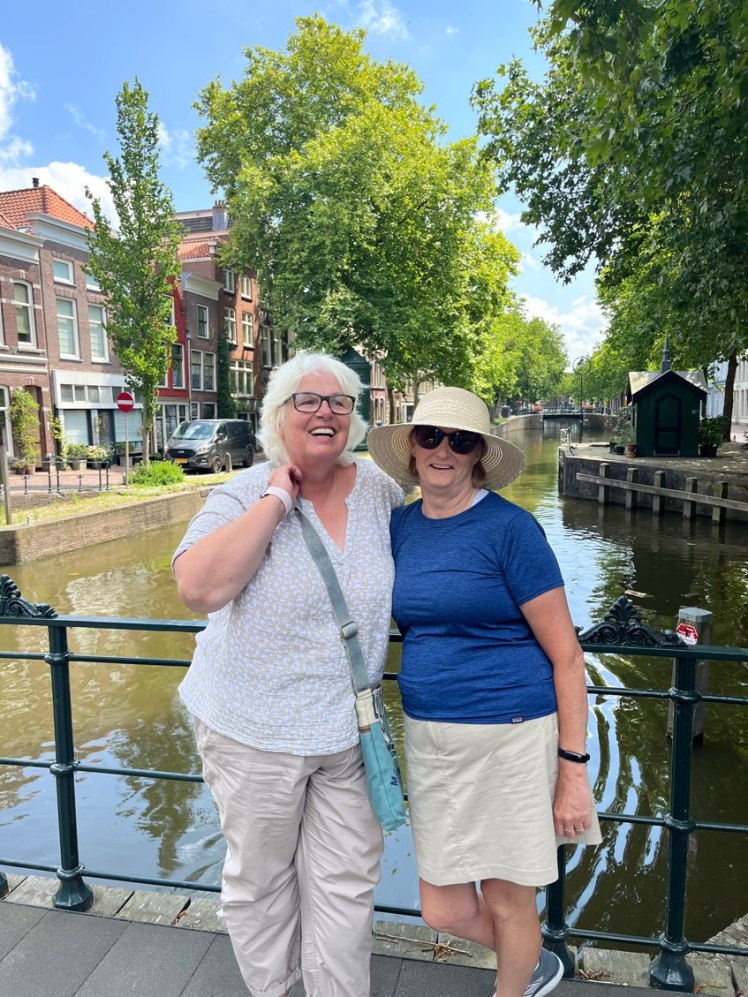
They still hold the Gouda cheese markets very Thursday in the centre square in front of the town hall which brings a throng of tourists.
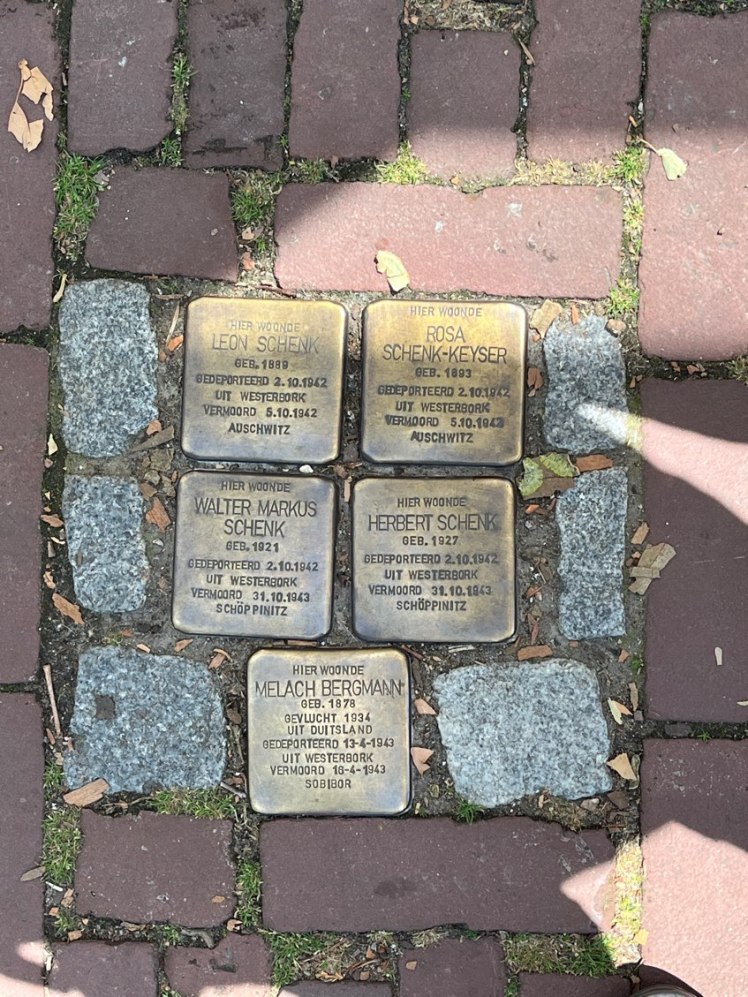
In Gouda, and other places throughout Germany and the Netherlands, there are “Stolpersteine”or “stumbling stones,” which are small, brass plaques embedded in the pavement in front of homes where Jewish people lived before being deported and murdered during the Holocaust.These stones serve as a memorial to the victims, bearing their names, birthdates, and the places of their deaths, often concentration camps. The Stolpersteine project, initiated by German artist Gunter Demnig, aims to commemorate each individual victim by placing a stone at their last freely chosen residence.
Steps 6,956
 Rowkin Rovings Blog