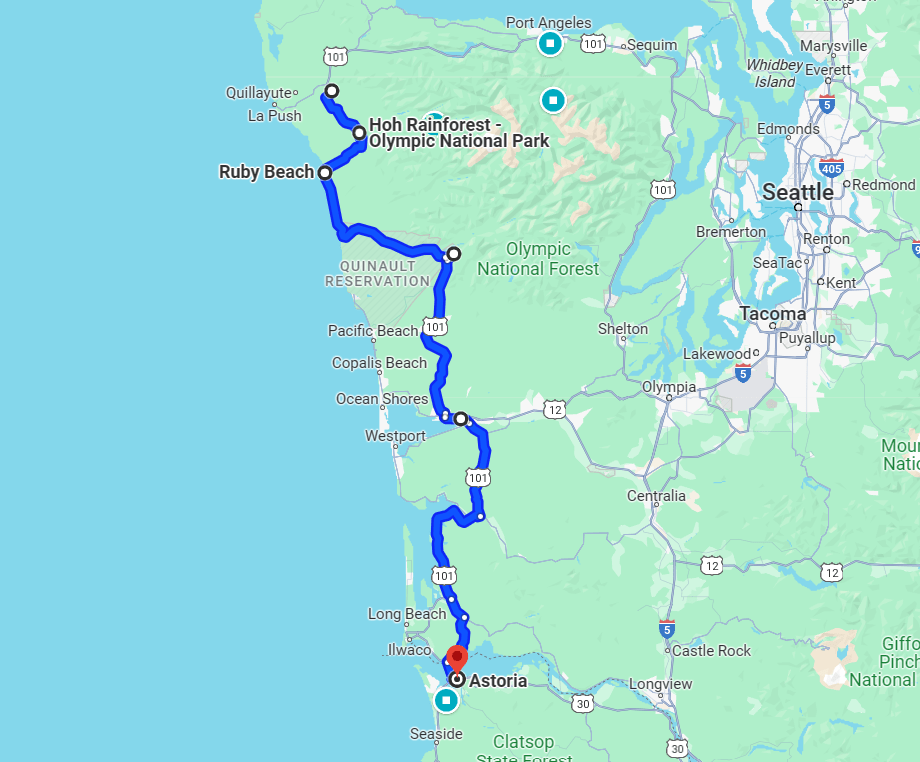
Awoke to a right old pea souper this morning. We are very close to the coast which abuts onto the northeast Pacific ocean which sends a multitude of rain to this neck of the woods plus some severe weather. You have these majestic trees all along this coastal region that grow to hundreds of feet in height and are over 500 years old but many of them are lost to the winds from the Pacific that tear through this region and push them over. As if surviving the chainsaws wasn’t hard enough for them.
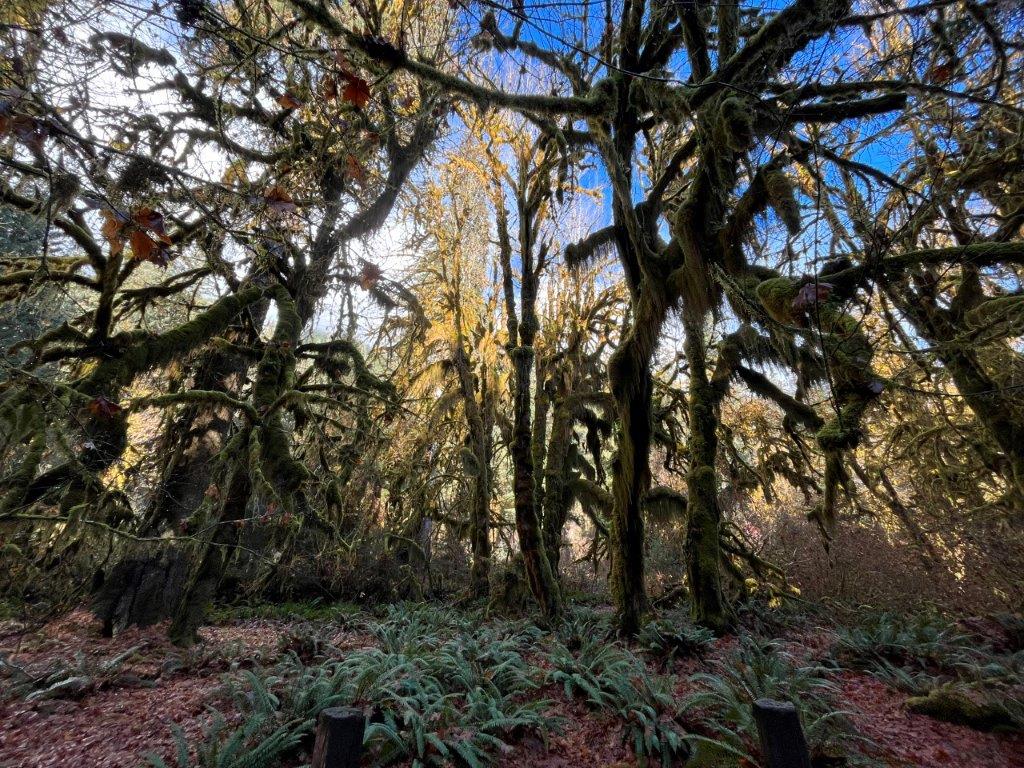
Our first walk was only a short one of about a mile through the Hall of Mosses at the end of Hoh Rain Forest Road. It was a 17-mile drive into the region (still trying to convert miles to kilometres and don’t get us started on the US gallon to litres for the fuel).
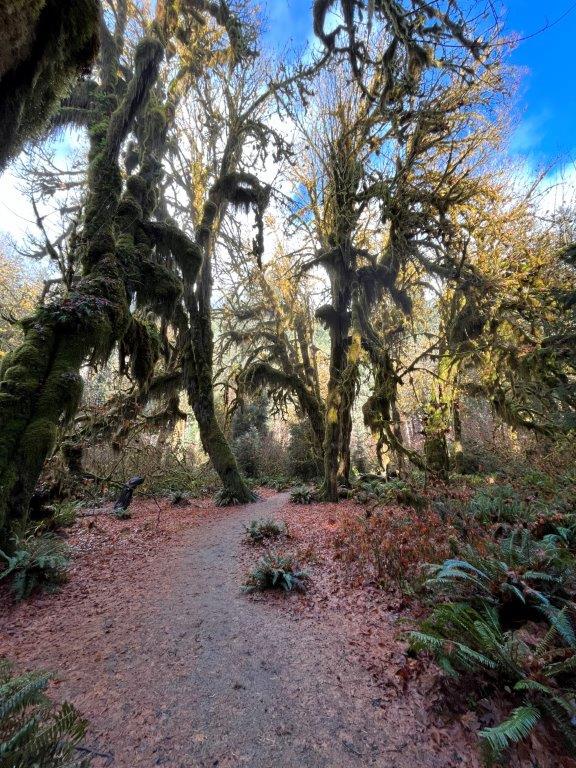
The place is very Jurassic in appearance. We kept comparing it to the temperate rain forests in Fiordland, New Zealand with the exception that the species of trees are quite different there. We mentioned yesterday that the rainfall here is 12 foot per year. After doing a bit of research, we discovered that the rainfall in Fiordland which is in the southwest of the South Island in New Zealand has an annual rainfall of 22 feet a year. We have been there but cannot remember the place having so much moss.
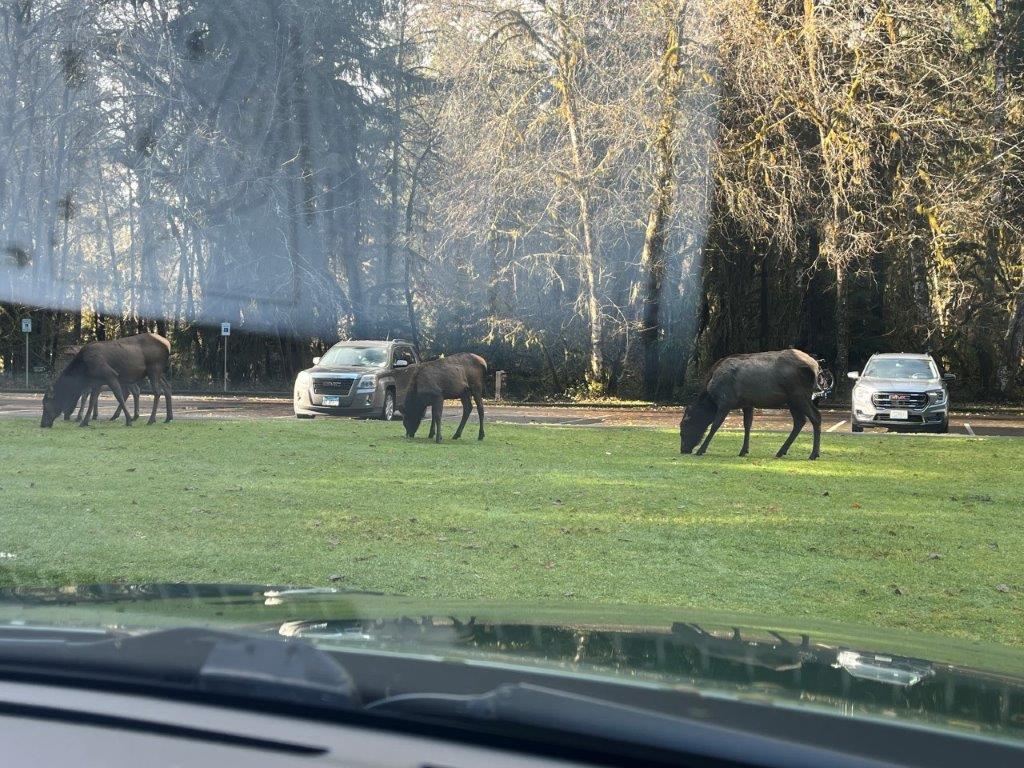
As we were about to leave, we came across these Roosevelt elk who were not the least bit interested in us. Also, on the drive back to the main road we had a bobcat run across the road in front of us. We think it was a juvenile, as it was on the small side.
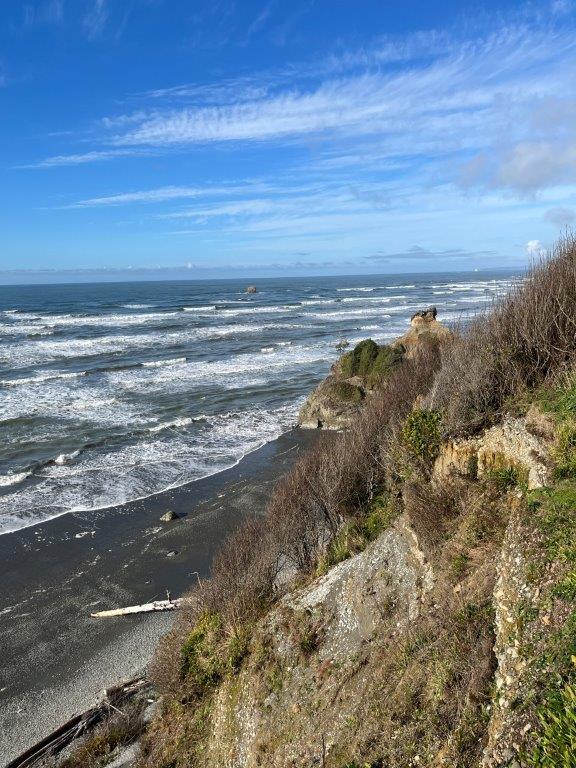
Then very suddenly we popped out onto the coast at a place called Ruby Beach. You could easily imagine this place being very wild and woolly at times. We followed the coastline for a bit and headed back inland for some more tree spotting.
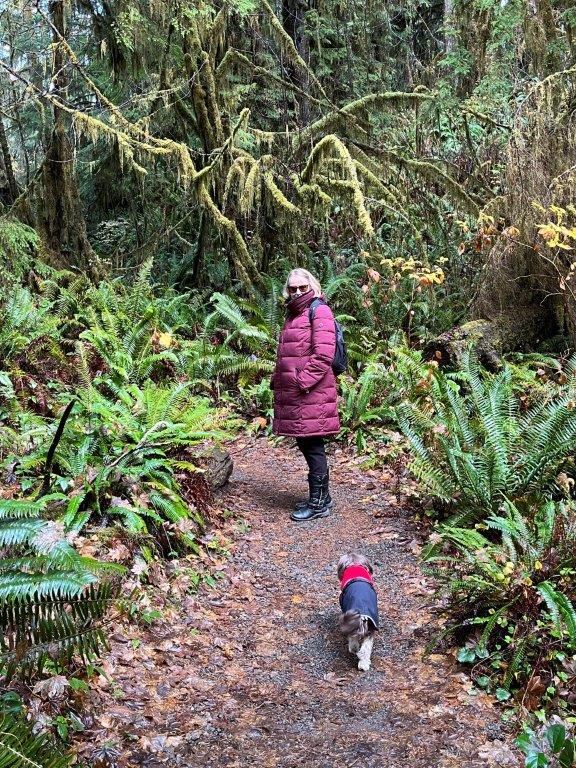
Another short walk along the forest floor and Toques first walk in a couple of days as she has not been feeling the best and spent a lot of time snoozing in her carrier.
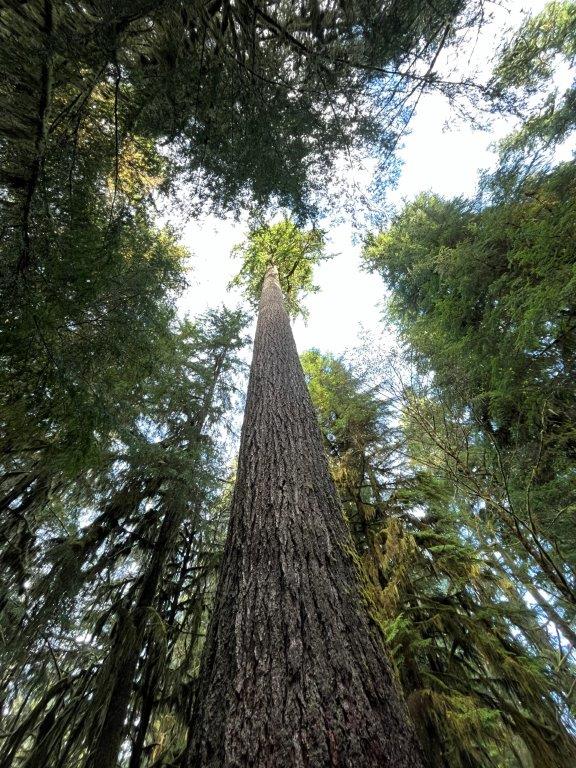
Back to more of the giants of the forest.
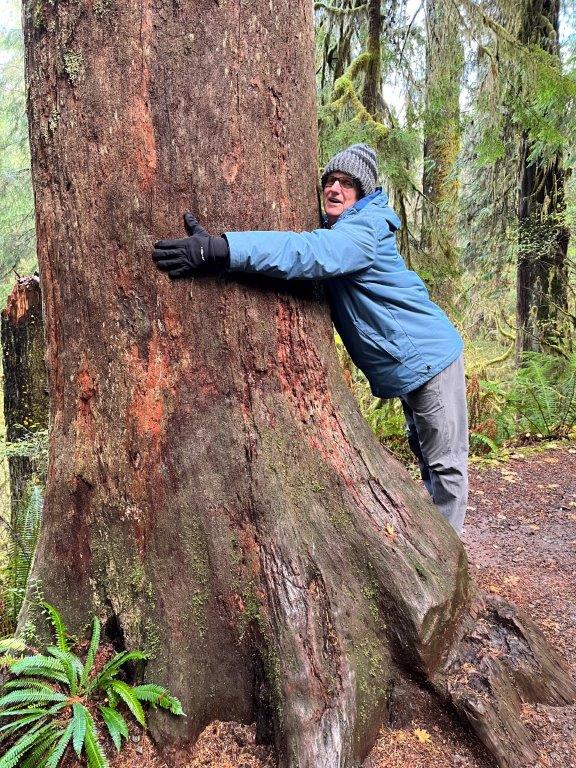
Cannot leave these beauties before giving them a hug farewell.
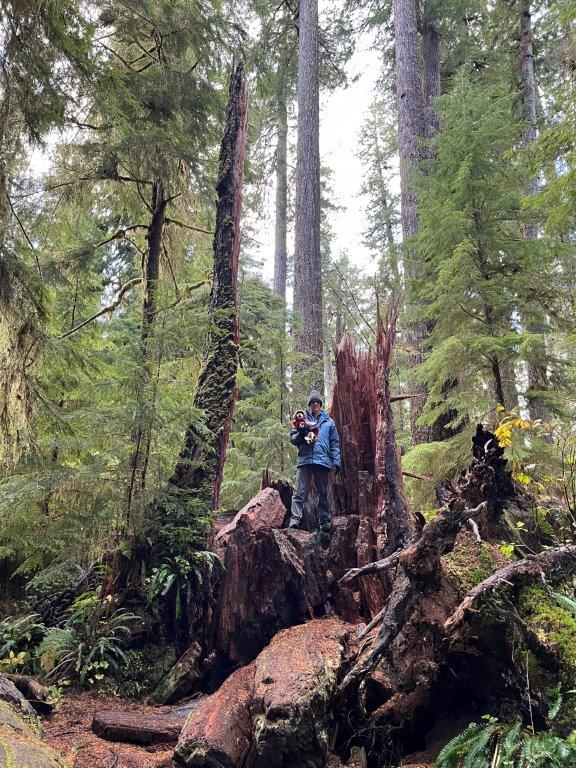
It is hard to get the true perspective of just how big these beauties really are so we thought that by maybe standing in the middle of one, it might help you get a grasp of them.
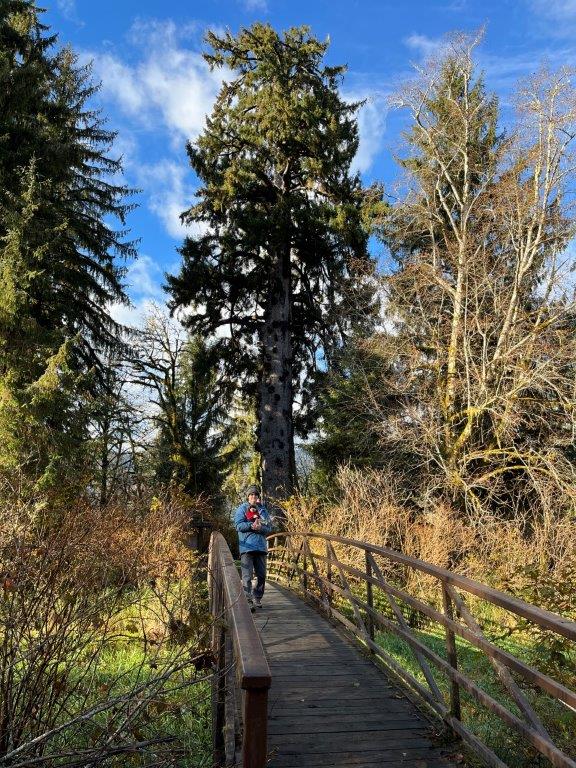
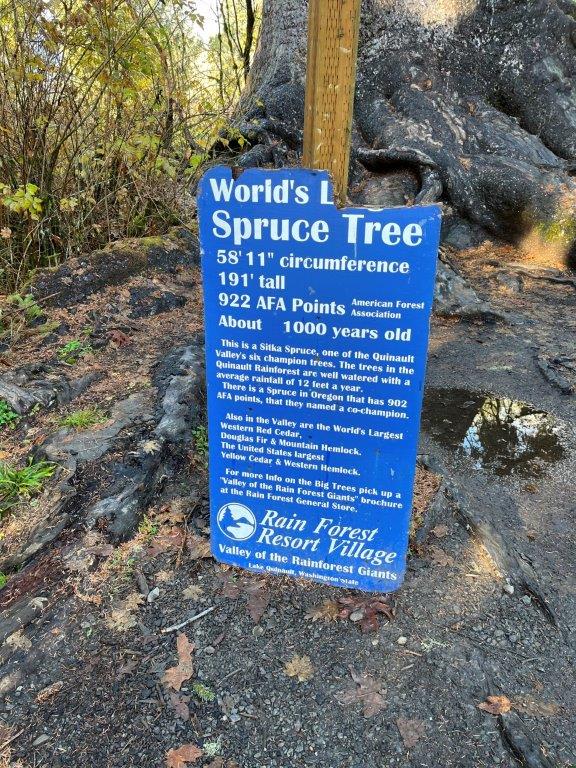
This is the Worlds Largest Sitka Cedar. Impossible to imagine that this could be as old as 1,000 years.

This is at the base of the tree.

The sun was starting to set lower into the sky and the mist was moving in from the lake surface which gave these ethereal vistas through the trees. We were pretty much the only visitors wherever we went today and appreciated how we got to view everything without the visual pollution of a lot of people. The areas we have been visiting the last few days would be a tourist mecca during the summer months and it would be almost impossible to get around and see as much as we have done. The weather has been around 8 to 9 degrees each day but as you can see from our photos, the weather gods have been very kind to us.
After this last stop it was then off down south and through many miles of tree lined road to the most northern town of Oregon called Astoria. Astoria is a port city and is located on the south shore of the Columbia River, where the river flows into the Pacific Ocean. The Columbia River is certainly one very large river but more on that as we are heading inland tomorrow to follow the river.
 Rowkin Rovings Blog